This article was written by Chris Whelan and originally printed in the Paris Independent newspaper on June 11, 2025. Permission to re-publish the article has been granted.
Paris, a bustling mill town nestled at the confluence of the Grand and Nith Rivers, has a rich history steeped in the utilization of waterpower for its industrial growth. In the 1880s, Paris was home to 3,000 residents, a number that swelled to 4,200 by 1924, showcasing its rapid expansion driven by the town’s reliance on waterpower for economic development.
During the early and mid-nineteenth century, the power harnessed from dams and raceways played a pivotal role in various industries in Paris. Initially, waterpower was utilized for grinding grain and gypsum, particularly Plaster of Paris, named after the local deposits. This power was also instrumental in sawing logs and operating rudimentary machinery. Notably, waterpower gained prominence in the late 19th and early 20th centuries, especially in the burgeoning textile mills that dotted the town.
John Penman emerged as a prominent industrialist during this period, acquiring several mills and mill sites in Paris between 1887 and 1903, consolidating them into his textile operations. In an era devoid of electricity, water served as the primary source of power for machinery, with water-powered mills acting as the heart of many small communities like Paris.
The core component of these mills was the waterwheel, a mechanism that converted the energy from flowing water into mechanical power for various tasks. Positioned within the water flow, the waterwheel’s paddles were struck by the water’s force, causing the wheel to rotate. This rotational energy was then transmitted to machinery via an axle, enabling the operation of diverse industrial processes.
While Paris was blessed with two rivers suitable for waterpower, mills were not typically constructed directly on the rivers due to the fluctuating water levels. To maintain a consistent power supply, millraces or raceways were developed. Channels of water diverted from dammed rivers with mechanisms regulating water flow to ensure a steady output throughout the day. Hiram Capron played a pivotal role in the development of these raceways, leasing them to mill owners to establish their mills along these controlled water channels.
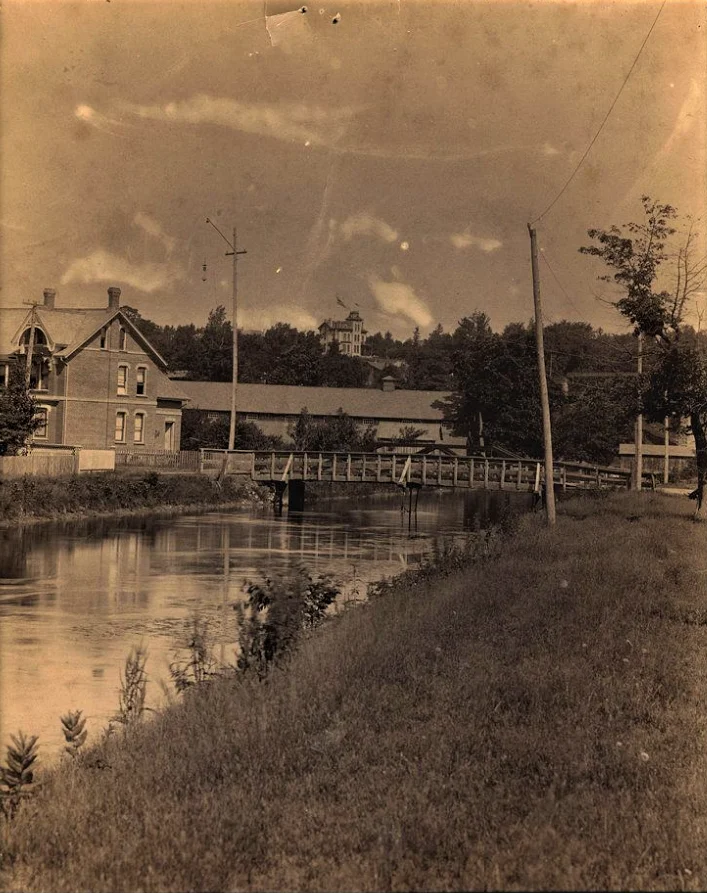
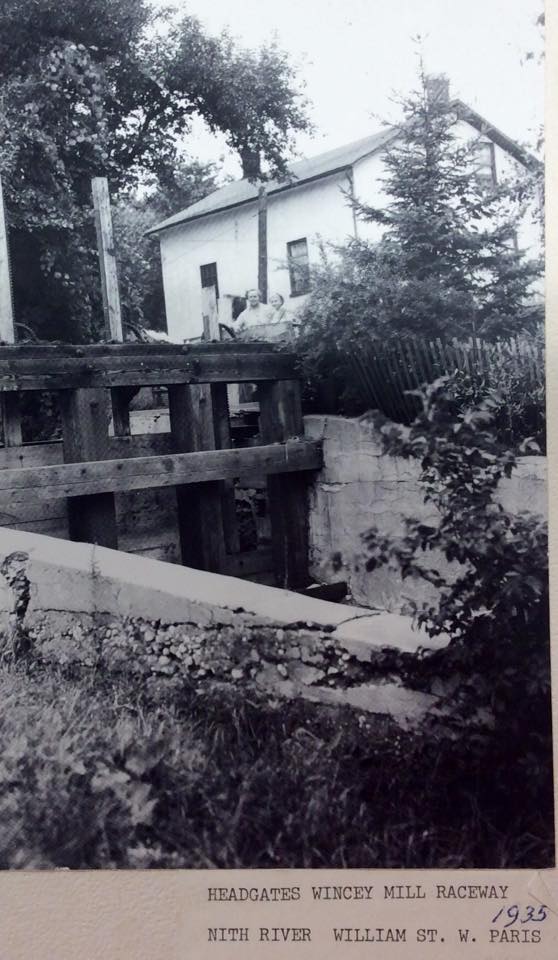
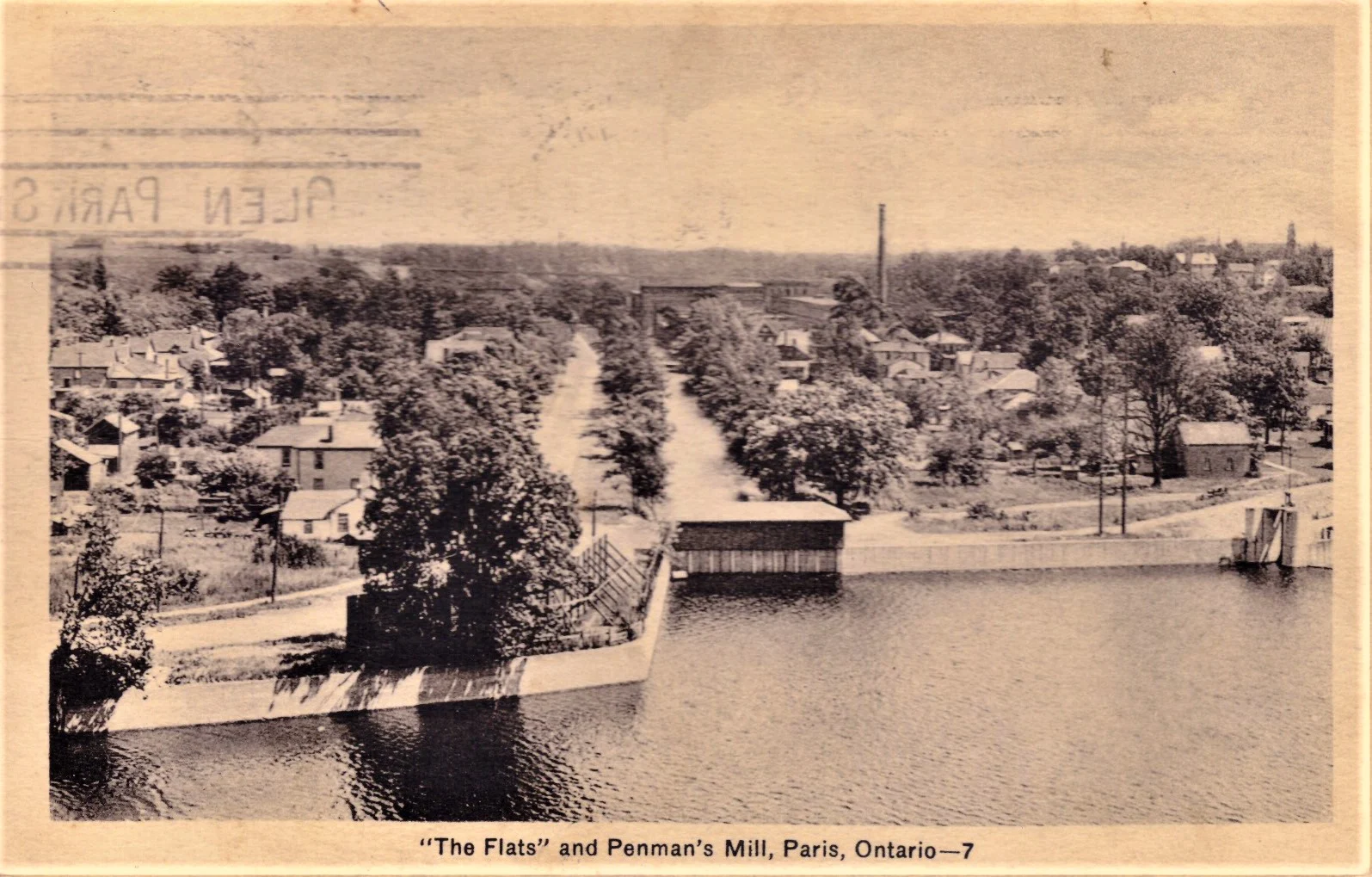
The inception of the first raceway in 1824 by William Holme marked a significant milestone in Paris’ industrial evolution. William’s raceway facilitated the mechanized grinding of plaster, augmenting productivity significantly. Capron’s subsequent expansions, such as the construction of a dam at the end of William Street and the enlargement of Holme’s raceway, further enhanced the town’s industrial capabilities.
By 1838, Capron owned several dams and races on the Nith River, supplying substantial power to local industries. These raceways powered a myriad of businesses including grist mills, sawmills, textile mills, tanneries, iron foundries, and machine shops, fostering economic growth and attracting prominent entrepreneurs like Norman Hamilton, Asa Wolverton, and John Penman.
The flourishing grist mills in Paris, vital for flour production, epitomized the town’s economic landscape. Merchant mills, a key feature by the 19th century, purchased grains from farmers to produce flour, making Ontario a significant player in the mill-trade. Capron’s raceways provided the essential power for these merchant mills, facilitating their operations.
Moreover, the allure of machine-powered cloth manufacturing drew industries to Paris, notably the Penman Manufacturing Co. Established by John Penman along the Nith River raceway, the company’s growth epitomized the town’s industrial prowess, with three mills operational by the 1880s.
Sawmills, crucial for timber processing, and tanneries, essential for leather production, also thrived in Paris due to water-powered machinery. Asa Wolverton’s successful sawmill and Hugh Finlayson’s lucrative tannery exemplified the town’s diverse industrial landscape.
In conclusion, Hiram Capron’s visionary development of water-power infrastructure in Paris laid the foundation for the town’s flourishing industries. Despite his eventual absence, Capron’s legacy endured, propelling Paris into a successful hub of industrial activity, fueled by the steady flow of its rivers and the innovative use of waterpower.
This historical landscape of Paris’ mill raceways underscores the transformative impact of waterpower on the town’s growth, shaping its economy and fostering a legacy of industrial innovation that continues to define Paris to this day.
Please support our local Paris newspaper. Follow the Paris Independent on Facebook (https://www.facebook.com/ParisOntarioUpdates), purchase a subscription and/or make a donation at www.patreon.com/theParisIndependent