This article was written by Chris Whelan and originally printed in the Paris Independent newspaper on July 2, 2025. Permission to re-publish the article has been granted.
Once upon a time, nestled across the Nith River from the old town of Paris, a hidden meadow awaited discovery. This little haven, untouched by bridges and accessible only through steep paths winding down from the lofty hills, became a playground for adventurous boys. They embarked on thrilling pirate escapades and cast their fishing lines from the willow-draped banks. Under the protective canopy of magnificent trees, their young eyes beheld wintergreen treasures, the delicate nests of birds, and the chattering antics of irate squirrels.
However, this paradise was open only to a select few boys, as it lay just a stone’s throw away from the town. It remained a sanctuary for cows, visited occasionally by the townsfolk. Until one day, a man from Paris, brimming with a visionary spirit, unveiled his grand idea to the members of the newly formed Paris Lions Club in 1931. Composed of ambitious business and professional men, the club sought a worthy project to ignite their passion and purpose.
Their hearts moved by the plight of underprivileged children in the town and beyond, the Lions sprang into action. They funded pairs of glasses, dental and tonsil operations, as well as essential nourishments like milk and cod liver oil. Yet, their ambitions soared higher when Jack Cameron, beckoned two members, Jack Knill and Jim Kogan, to explore a hidden gem—a meadow between old Laurel Street and the Nith River.
Overgrown with thickets and willows, the land possessed great potential for transformation into a charming park for the town’s children. The idea enthralled the Lions, and they rallied together, envisioning a monumental project to raise funds. In a stroke of genius, they organized a three-car raffle, which, within a year, amassed an impressive $6,000.
With their newfound resources, the Lions acquired land stretching from the Wincey dam to the point opposite Coney Island, and back to the old street. The centerpiece of their undertaking was the development of the central area. On higher ground, they constructed the first wading pool, while swings, teeter-totters, and picnic tables found their places amidst the natural beauty. A plank bridge, extending from the west end of Mechanic Street to the heart of the park, served as a gateway to this newfound haven.
Bill Elman generously offered his engineering expertise to survey the land, while the J. D. Adams Limited Company selflessly lent the club a grader free of charge. The following year, amidst great fanfare, the Lions ceremoniously handed over the newly created children’s park to the town, under the leadership of the late W. G. Pickell.
In no time at all, families from near and far flocked to this idyllic retreat, discovering a perfect spot for joyous picnics with their children. The original park expanded to its limits, accommodating the growing number of visitors. Picnic tables and additional amenities were added each year, further enhancing its allure.
However, a recurring concern plagued both the Lions and the town council—the bridge. Every September, the town staff dismantled the plank bridge to protect it from the spring floods, only to reassemble it again in June. Yet, the unpredictable Nith River sometimes unleashed its treacherous nature, with sudden, violent summer storms causing the river to rise rapidly. The plank bridge fell victim to the raging waters on numerous occasions.
Many years ago, Lion Jim Mogan, later residing in Toronto, devised a solution—a new bridge, supported by sturdy cement and steel piers. Although still removable, this bridge stood above the usual high-water mark, safeguarding against the ravages of nature. Alas, even this feat of engineering could not withstand the onslaught of Hurricane Hazel, which swept away the new bridge and damaged the piers. The responsibility for a bridge then fell upon the town council, and a permanent, single-span bridge was erected. This new structure not only provided a year-round shortcut from the Victoria Survey to the new homes on Laurel Street but also granted safe passage to all who sought the park’s tranquil embrace.
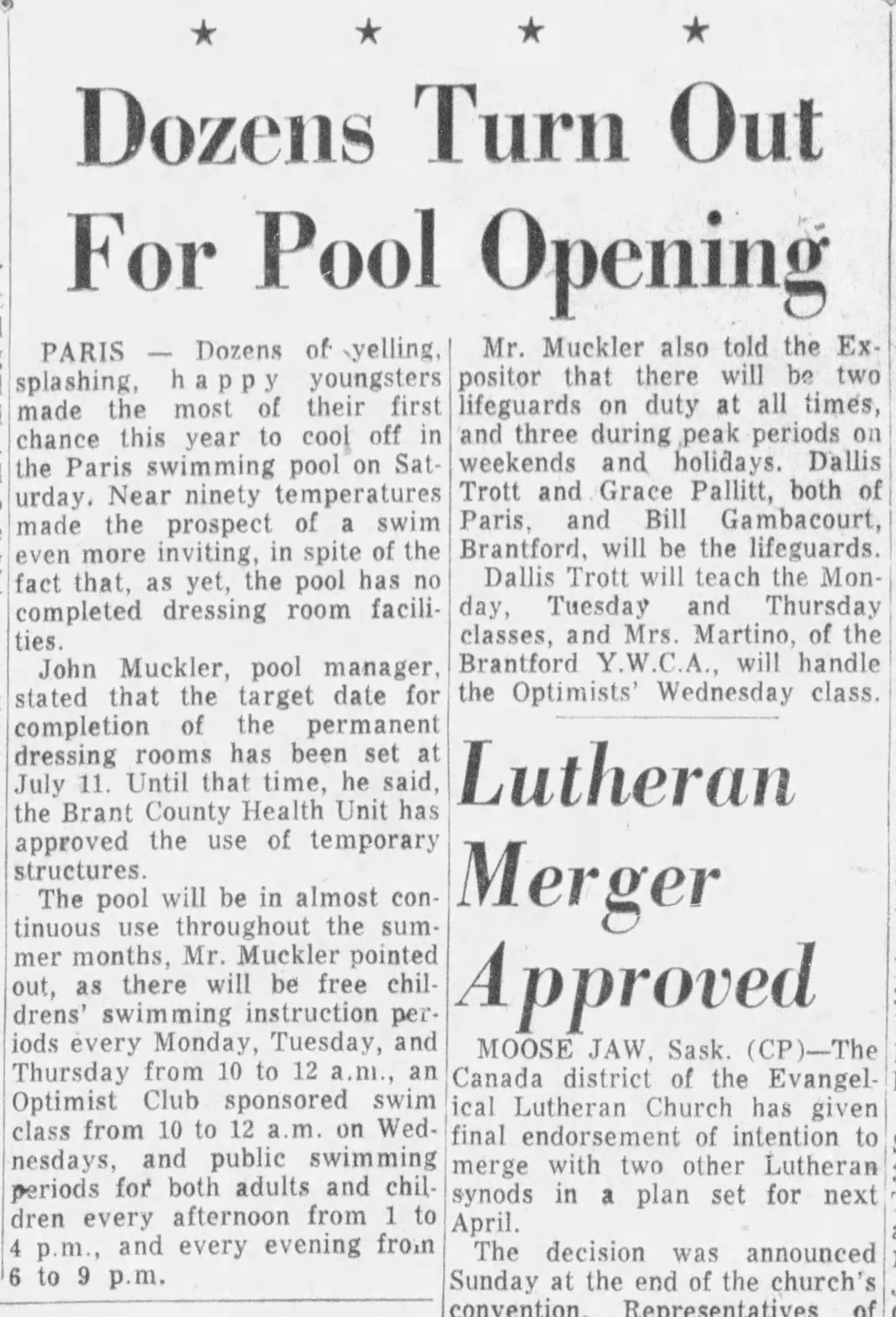
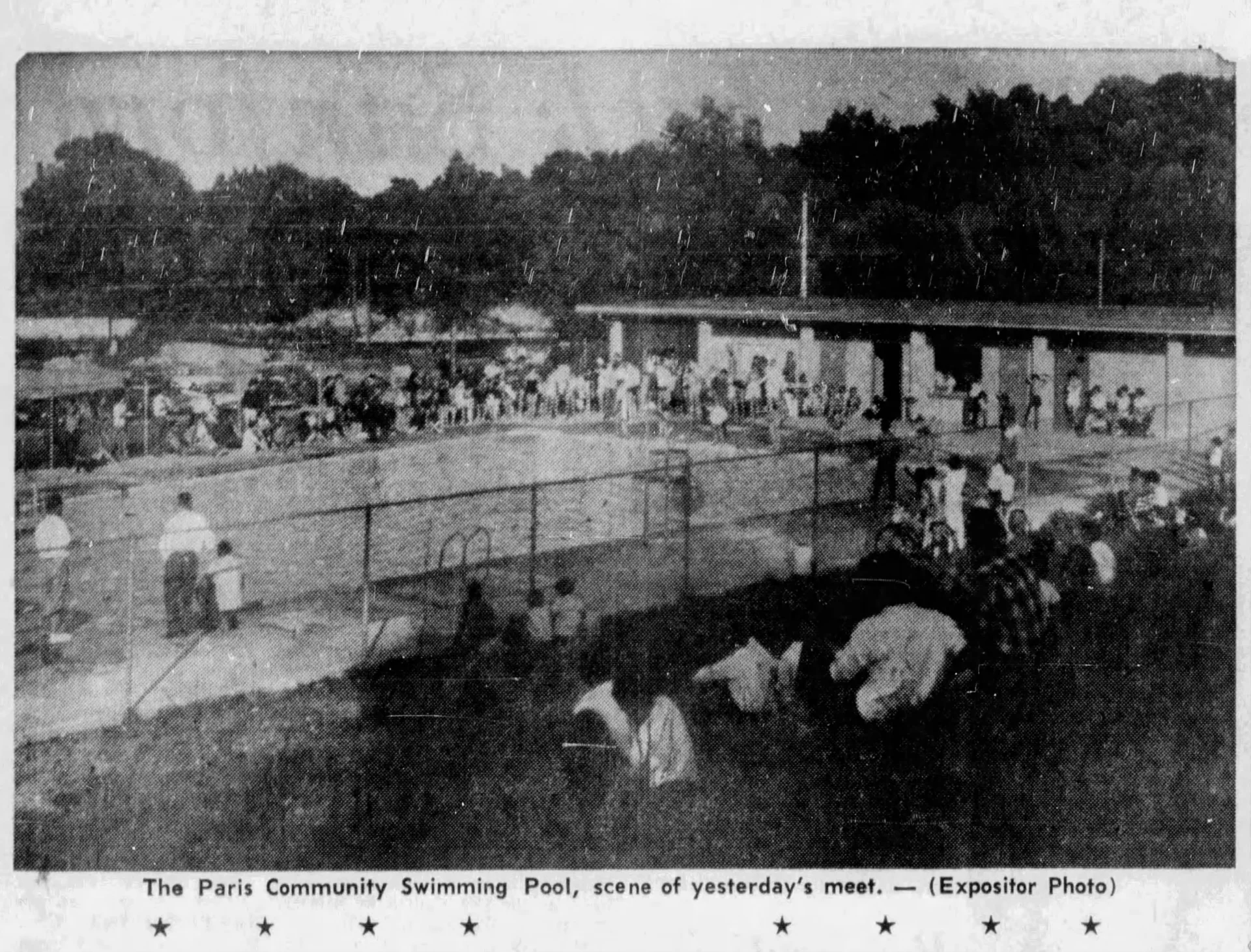
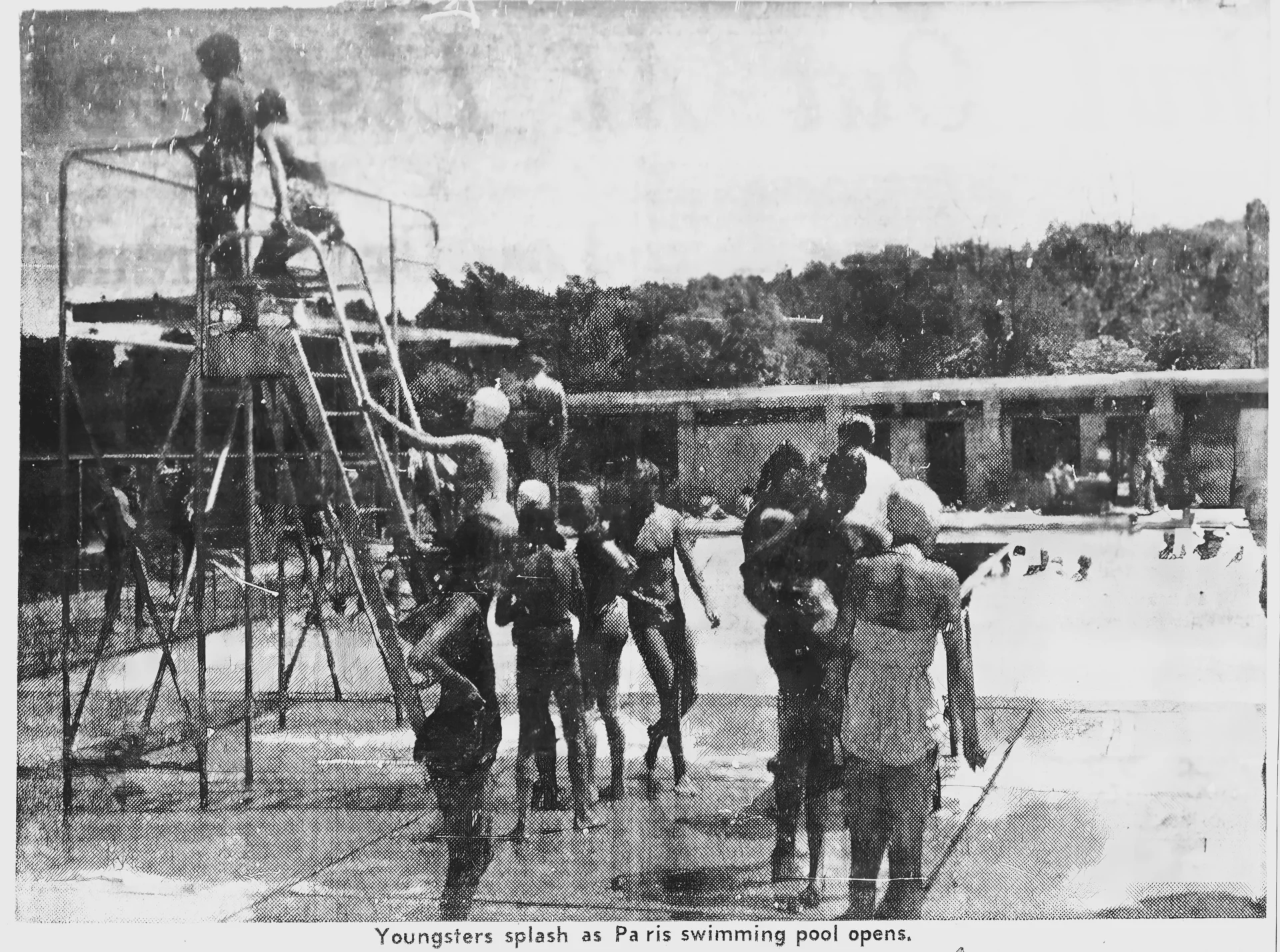
Gazing toward the future, the Lions Club’s vision extended to the creation of a community pool for Paris. This endeavor aimed to provide a sanctuary for children and adults alike, shielding them from the polluted waters of the Nith and Grand Rivers. Over the years, the club raised nearly $60,000 towards the realization of this dream, and in 1959, the community pool opened for swimmers. Emboldened by this achievement, the Lions Club set their sights on an even grander vision—a park that would surpass all previous endeavors.
The club acquired the land north of the community pool, extending from Lions Park to the No. 1 Mill dam. Despite its swampy nature, the land boasted majestic elms on its western and northern fringes. The industrious Lions employed bulldozers to level the terrain, and most of it was seeded, paving the way for a new baseball diamond. Beneath the sprawling canopy of these ancient trees, the club designated serene picnic areas, providing a peaceful retreat for those seeking solace amidst nature or a front-row seat to watch the exhilarating games.
Over the course of their first twenty years, the Lions Club devoted $28,789 to the development of Lions Park. Since then, an additional $19,458 had been allocated for its maintenance and the development of the new land. In total, the club had disbursed an impressive $86,085 for the betterment of the town and its residents. On the eve of their 30th-anniversary celebration, the Lions Club gathered at the White Horse Restaurant, joined by distinguished men from far and wide. The guest of honour, Henry J. McFarland, hailing from Albany, New York, and serving as the director of Lions International, delivered an inspiring speech.
The true testament to the legacy of past presidents and members lies in the pristine and orderly children’s park, which has welcomed countless visitors throughout the years. The ongoing development of the park symbolizes the ever-present enthusiasm and visionary spirit that define the Lions membership. As the park’s monument stands tall, it serves as a reminder of the unwavering dedication, enduring generosity, and boundless love for our community exemplified by the Lions Club of Paris.
Please support our local Paris newspaper. Follow the Paris Independent on Facebook (https://www.facebook.com/ParisOntarioUpdates), purchase a subscription and/or make a donation at www.patreon.com/theParisIndependent